
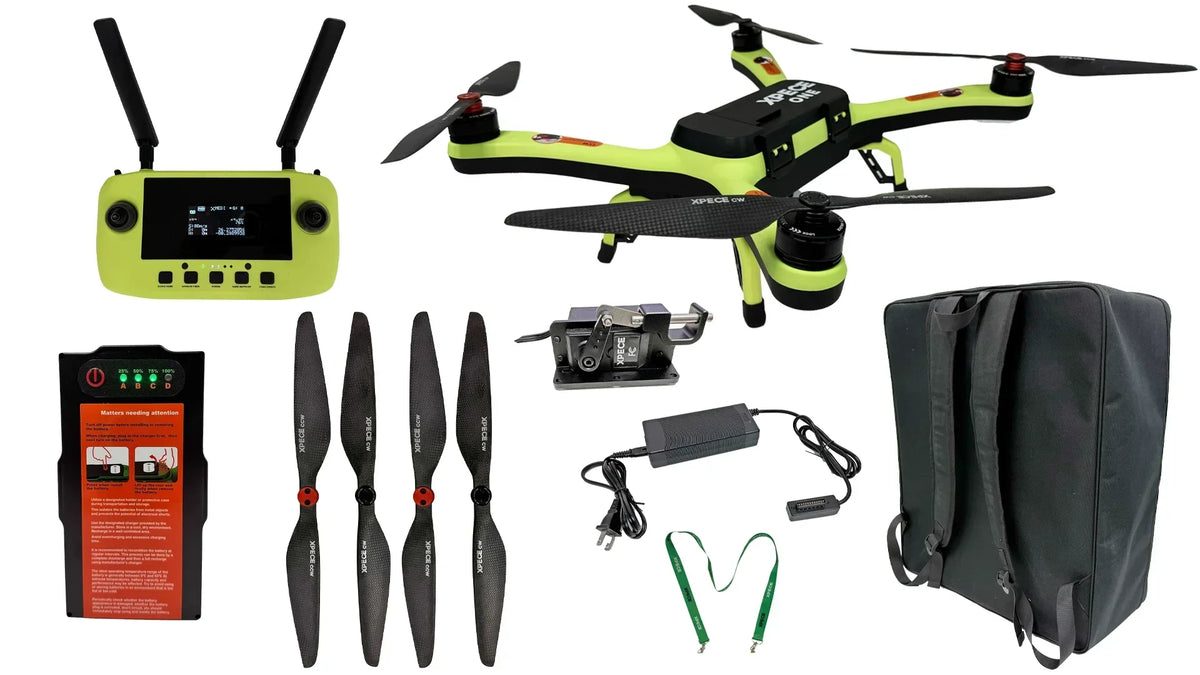
The box shows up, the batteries are charging, and you want to be on the beach by the next good tide. This checklist covers everything between unboxing and your first bait landing past the bar: the paperwork that has to happen first, how to rig a reel that can actually fish a long drop, a practice flight without bait, and the exact order of steps for the first real run.
How we built this checklist: ChoreBotic sells fishing drones, including the Xpece ONE, so this is a seller's guide rather than an independent review. It is built from the FAA's published rules, the manufacturer's specifications, and the mistakes new drone anglers most often run into. Your drone's manual always wins over any general guide, including this one.
The checklist at a glance
- Register the drone with the FAA and pass the free TRUST test (recreational flyers).
- Confirm Remote ID and put your registration number on the outside of the drone.
- Check that drone fishing is allowed where you plan to fish, and carry your fishing license.
- Fully charge every flight battery and the remote.
- Inspect propellers, the camera module, and the release mechanism.
- Rig a reel with enough line for the distance you plan to fish.
- Pick a launch spot with a clear corridor over the water and no people underneath it.
- Fly a practice session with no bait, then with a plain sinker.
- Make your first real drop at a modest distance.
- Rinse, dry, and store everything properly when you are done.
Step 1: Handle the paperwork before the first flight
This is the part people skip, and it is the part that can turn a fun morning into a fine. None of it takes long.
FAA registration
Any drone that weighs 250 grams (0.55 lb) or more has to be registered with the FAA before it flies outdoors. Every bait-carrying fishing drone is far over that line. Recreational registration is done online through the FAA DroneZone, costs $5, and lasts three years. One recreational registration number covers every drone you own, and that number has to be marked on the outside of the aircraft. A strip of label tape on the arm or body works fine.
The TRUST certificate
Recreational flyers must also pass The Recreational UAS Safety Test, known as TRUST. It is free, it is online, and most people finish it in well under an hour. Keep the completion certificate on your phone, because you may be asked to show it.
Remote ID
Registered drones must broadcast Remote ID, which works like a digital license plate. Retail listings describe the Xpece ONE as Remote ID compliant, but confirm it in your manual. If a drone does not broadcast Remote ID on its own, it needs an add-on broadcast module or it can only be flown at an FAA-recognized identification area.
If anyone pays you to fish
Charter captains and fishing guides who use a drone as part of a paid trip are no longer recreational flyers. That falls under the FAA's Part 107 rules, which require a remote pilot certificate. If money changes hands, look into Part 107 before you fly for clients.
Fishing rules still apply
The drone is a way to deliver bait, so your normal fishing license, bag limits, and gear rules all still apply. Drone fishing itself is also restricted in some places. Hawaii, for example, prohibits using drones for fishing on or near state marine waters without a permit from its Department of Land and Natural Resources, and national parks do not allow drones to take off, land, or fly from park land. Some beaches, piers, and tournaments have their own bans. Check the rules for the exact spot you plan to fish before the day you go, not on the sand that morning.
Step 2: Charge and inspect
The Xpece ONE is designed to fly without an app, pairing, or calibration, which makes the first day simpler than it is with most camera drones. You still want a careful first look before anything leaves the ground.
- Charge every flight battery to full, plus the remote. Flight time is rated at up to 28 minutes, but that number drops with heavy bait and wind, so start every session full.
- Check each propeller for chips, cracks, or loose mounting. A damaged prop is the cheapest part on the aircraft and the most common cause of a bad flight. Keep a spare propeller pair in your bag.
- Seat the camera module firmly in the camera bay and confirm that the live view shows up on the monitor built into the remote.
- Work the release mechanism a few times on the ground so you know exactly what the drop looks and feels like before there is line attached.
- Read the manual's section on return to home. Know which button triggers it and what the drone will do when the battery gets low.
Step 3: Rig a reel that can fish the distance
This is the most common first-day mistake, and it has nothing to do with the drone. A bait dropped 500 yards out is only useful if your reel holds enough line to reach it and still fight a fish back.
| Distance you plan to drop | Minimum line on the reel | Typical setup |
|---|---|---|
| Up to 200 yards | About 300 yards | Large spinning reel with braid |
| 200 to 500 yards | About 600 to 700 yards | Big spinning reel or conventional with high-capacity braid |
| 500 yards and beyond | 800 yards or more | Heavy conventional reel, strong drag, trusted leader |
Braid is the standard because it packs far more distance onto a spool than monofilament of the same strength. Add a shock or wind-on leader rated for the fish you are targeting. Keep the total bait rig, including sinker, comfortably under the drone's 7 lb payload rating. Lighter loads mean longer flight time and more margin in the wind.
Step 4: Choose a safe launch spot
- A clear corridor: you need a path from the sand out over the water with nobody walking, swimming, or surfing underneath it. Flying over people is off the table.
- Airspace: check the FAA's B4UFLY information or an approved airspace app before you go. Near airports, you may need authorization, and recreational flights stay at or below 400 feet in uncontrolled airspace.
- Line of sight: you or a spotter standing next to you must be able to see the drone with your own eyes for the whole flight. The camera feed does not count.
- Wind: check the forecast and the wind limit in your manual. An onshore wind makes the flight home harder, and the flight home is the one that matters.
- Birds: gulls, pelicans, and other seabirds are protected. Give flocks and nesting areas a wide berth.
Step 5: Fly a practice session first
Do this on a quiet morning before you ever attach bait. It takes 20 minutes and it is the best insurance you can buy.
- Hover over the sand at head height for a minute. Get a feel for the controls and how the drone holds position.
- Fly short loops over land and practice turning it to face you and away from you.
- Test return to home over land. Fly 50 yards out over the beach and trigger it, so you have watched it work before you ever rely on it over water.
- Fly a short trip over the water without anything attached, maybe 100 yards, and bring it back. Watch the battery reading as you go.
- Repeat with a plain sinker on the release at a short distance. Practice the drop until it feels routine. A lost sinker costs a dollar. A lost bait rig costs a good deal more, and a rushed first drop is how drones end up in trouble.
Step 6: Your first real drop, step by step
- Set the rod in a sand spike or have a partner hold it, with the reel in free spool or the bail open so line can pay out without resistance.
- Clip the line into the release according to the manual, with the bait hanging cleanly below the aircraft and nothing tangled around the legs or props.
- Take off and climb to a modest height before heading out, so the bait clears the waves and the line clears the beach.
- Fly straight out along your clear corridor at a steady speed. Watch the line paying off the reel as well as the drone.
- Pick your spot. On your first day, keep it modest, around 150 to 300 yards. Use the camera feed to drop on a color change or the edge of a bar if you can see one.
- Release the bait, confirm on the monitor that it dropped, and turn for home right away.
- Land, then fish. Close the bail or engage the reel, take up the slack gently, set your drag, and put the rod back in the spike.
- Check the battery before every second run. If it is not comfortably above what you need for a full round trip, swap it.
Step 7: After the session
- Clean off salt: the Xpece ONE is built for saltwater and floats, but salt residue still shortens the life of any aircraft. Wipe it down as the manual recommends, paying attention to the motors and the release.
- Let it dry fully before it goes back in the case.
- Store batteries correctly: do not leave them fully charged or fully empty for weeks. Follow the manual's storage charge advice.
- Re-check the props before you pack them, so you are not finding a cracked blade on the beach next time.
First-day mistakes and how to avoid them
| Mistake | What happens | The fix |
|---|---|---|
| Bail closed or drag locked on the way out | The line goes tight and drags the drone or snaps the line | Open the bail or free spool before takeoff, every time |
| Reel too small for the drop | You spool out before the drop point, or cannot fight the fish back | Match line capacity to distance using the table above |
| Flying out on a half battery | A slow fight home into the wind with no reserve | Start full, swap early, and carry a spare flight battery |
| Skipping the practice flight | The first drop is also the first time you have flown under load | Do Step 5 before any bait goes on the clip |
| Ignoring the wind forecast | Range and flight time drop sharply on a heavy breeze | Check the manual's wind limit and keep drops short on windy days |
| Not checking local rules | A ranger, a fine, or a lost day | Confirm drone fishing is allowed at that exact beach before you go |
What to keep in your drone fishing bag
- Fully charged flight batteries (two is the practical minimum for a real session)
- A spare propeller pair
- Your FAA registration number and TRUST certificate on your phone
- Fishing license
- A sand spike, extra leaders, and pre-tied bait rigs
- A small towel and fresh water for wiping down after the session
If you are still choosing a setup, the Xpece ONE includes the camera and the monitor built into the remote. The BARE version flies and drops the same way but has no camera. The Fly More bundle adds the second battery, which most anglers end up buying anyway. For background on how the drop works, see our guide to how fishing drones work, the full Xpece ONE review, and our honest comparison of drone fishing vs surf casting.
Frequently asked questions
Do I need to register a fishing drone with the FAA?
Yes. Any drone weighing 250 grams (0.55 lb) or more must be registered before it flies outdoors, and every bait-carrying fishing drone is well over that. Recreational registration costs $5 through the FAA DroneZone, lasts three years, and covers all of your drones under one number, which must be marked on the outside of each aircraft.
Do I need a license to fly a fishing drone?
Recreational flyers need to pass the free TRUST test and carry proof of completion. If you fly as part of a paid service, such as a fishing guide or charter, you need an FAA Part 107 remote pilot certificate instead. Either way, you still need a normal fishing license.
How long does it take to set up a fishing drone?
The first time, plan on an evening for registration and TRUST, plus a 20-minute practice session. After that, a beach setup usually takes 10 to 15 minutes: battery check, prop check, rig the bait, open the bail, and fly. The Xpece ONE needs no app, pairing, or calibration, which keeps the routine short.
How far should my first drop be?
Keep it modest, around 150 to 300 yards. That is far enough to get past most inner bars, and short enough that the round trip leaves plenty of battery and you can watch the drone clearly the whole way.
What reel do I need for drone fishing?
One that holds well more line than the distance you plan to drop. For drops of 200 to 500 yards, plan on 600 to 700 yards of braid. For longer drops, a heavy conventional reel with 800 yards or more and a strong drag is the usual choice.
Can I fly a fishing drone in the wind?
Within the limit in your manual, but wind cuts range and flight time, especially with bait attached. Keep drops shorter on breezy days and be most careful with onshore wind, because the flight home is the hard part.
Is drone fishing legal everywhere?
No. Drone fishing is restricted in some states and places, including Hawaii's state marine waters and national parks, and some beaches, piers, and tournaments have their own rules. Check the regulations for the exact spot you plan to fish before you go.
The bottom line
A good first day with a fishing drone is mostly preparation: paperwork done, batteries full, a reel that can fish the distance, a practice run with a sinker, and a modest first drop on a calm morning. Do those in order and the drone becomes what it should be, a way to put a bait where your cast never could.
See the Xpece ONE Fishing Drone → or browse all fishing drones at ChoreBotic.
Share:
Best Underwater Fishing Cameras (And When You Need One vs a Fish Finder) 2026